- Development & IT
- Servers
- RDS Server Monitoring

RDS Server Monitoring is a system administration and performance management solution used to monitor Remote Desktop Services (RDS) environments, server health, user sessions, resource usage, and network activity across Windows server infrastructures.
📌 What is RDS Server Monitoring?
RDS Server Monitoring refers to monitoring solutions and administration tools designed for supervising and managing Microsoft Remote Desktop Services (RDS) environments. These tools help administrators track server health, user sessions, system resources, application performance, and remote desktop infrastructure operations.
Remote Desktop Services (RDS) is a Microsoft technology that allows users to remotely access desktops, applications, and servers over a network or the internet. Businesses and organizations commonly use RDS environments to provide centralized remote work access, virtual desktops, application hosting, and shared server resources.
Because many users may connect simultaneously to the same server, monitoring becomes extremely important for maintaining performance, stability, and security.
RDS Server Monitoring solutions are commonly used for:
- Monitoring Remote Desktop sessions
- Tracking server performance
- Managing user activity
- Detecting resource bottlenecks
- Monitoring CPU and RAM usage
- Identifying disconnected sessions
- Troubleshooting server issues
- Maintaining remote work infrastructure
The software is commonly used by:
- System administrators
- IT departments
- Managed service providers (MSPs)
- Corporate server environments
- Educational institutions
- Hosting providers
- Enterprise IT infrastructures
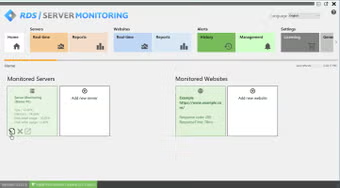
One of the biggest strengths of RDS Server Monitoring tools is centralized visibility. Administrators can monitor multiple servers and user sessions from a single dashboard.
Depending on the software used, RDS monitoring solutions may support:
- Real-time performance monitoring
- Session tracking
- User login monitoring
- CPU and memory usage analysis
- Disk and network monitoring
- Event logging
- Alerts and notifications
- Session shadowing
- Remote management tools
- Historical reporting
- Application performance tracking
- Resource usage graphs
These tools help administrators quickly identify issues such as:
- High CPU consumption
- Memory overload
- Session freezes
- Network congestion
- Application crashes
- Unauthorized access attempts
- Idle disconnected sessions
Another major advantage is proactive maintenance. Instead of waiting for users to report problems, administrators can detect performance issues early and optimize server environments before downtime occurs.
RDS Server Monitoring tools are especially valuable in environments where dozens or hundreds of users rely on remote desktop infrastructure for daily work.
Overall, RDS Server Monitoring acts as an essential management and optimization solution for maintaining stable, secure, and efficient Remote Desktop Services environments.
💻 System Requirements (Detailed)
To run RDS Server Monitoring solutions smoothly, the following system requirements are recommended:
Minimum Requirements
- Operating System:
Windows Server editions / Windows 10 / Windows 11 - Processor:
Intel or AMD Dual-Core processor - RAM:
Minimum 4GB RAM - Storage Space:
At least 1GB free disk space - Network:
Stable LAN or internet connection for remote monitoring - RDS Environment:
Microsoft Remote Desktop Services enabled
Recommended Requirements
- Processor:
Intel Xeon / Ryzen 7 / Server-grade processor - RAM:
8GB–16GB RAM or more for enterprise monitoring - Storage:
SSD recommended for logging and performance databases - Network:
Gigabit or enterprise network infrastructure - Additional Tools:
Commonly used with:- Microsoft Remote Desktop Services
- PRTG Network Monitor
- SolarWinds Server & Application Monitor
Best Suitable For
RDS Server Monitoring is ideal for:
- Enterprise RDS environments
- Remote work infrastructures
- IT departments
- Multi-user server systems
- Hosting providers
- Virtual desktop infrastructures (VDI)
- Managed service providers
- Performance optimization environments
🔄 Alternatives
If you want similar server monitoring and RDS management solutions, you can try:
- PRTG Network Monitor
- SolarWinds Server & Application Monitor
- ManageEngine OpManager
- Zabbix
- Nagios
❓ FAQ
Q1. What is RDS Server Monitoring mainly used for?
It is used to monitor Remote Desktop Services performance, sessions, and server health.
Q2. Does RDS monitoring help improve performance?
Yes, it helps identify bottlenecks and optimize resource usage.
Q3. Can administrators monitor multiple servers?
Yes, many monitoring tools support centralized multi-server management.
Q4. Is RDS monitoring useful for remote work environments?
Yes, it is highly important for organizations using remote desktop infrastructures.
Q5. Can monitoring tools track user sessions?
Yes, session activity and user connections can be monitored.
Q6. Do these tools support alerts and notifications?
Yes, most solutions provide automated alert systems.
Q7. Is technical knowledge required?
Basic server administration knowledge is recommended for advanced monitoring setups.
🔄 Best Alternatives
Features
- ✔️ Real-time server performance monitoring
- ✔️ Remote Desktop session tracking
- ✔️ CPU and RAM usage analysis
- ✔️ Disk and network monitoring
- ✔️ User login and logout tracking
- ✔️ Session management tools
- ✔️ Historical performance reports
- ✔️ Resource usage graphs and dashboards
- ✔️ Alerts and notification systems
- ✔️ Multi-server monitoring support
- ✔️ Event log analysis
- ✔️ Application performance monitoring
- ✔️ Remote administration functionality
- ✔️ Security and access monitoring
- ✔️ Centralized RDS environment management
👍 Pros & 👎 Cons
Pros
- Helps maintain stable RDS environments
- Improves server performance management
- Useful for troubleshooting remote session problems
- Provides centralized monitoring dashboards
- Detects performance bottlenecks quickly
- Supports proactive maintenance
- Helps optimize resource allocation
- Useful for enterprise remote work infrastructures
Cons
- Advanced monitoring systems may require licensing
- Large environments may require strong server hardware
- Initial configuration can be complex
- Some enterprise features may need technical expertise
- Excessive monitoring may slightly impact performance on low-end systems
Expert Review
In my opinion, RDS Server Monitoring solutions are extremely important for organizations relying on Microsoft Remote Desktop Services and remote work infrastructures. As remote desktop environments grow larger, performance monitoring and proactive maintenance become critical for stability and user productivity.
One of the biggest advantages is centralized visibility into user sessions, server resources, and application performance. Administrators can quickly identify overloaded servers, disconnected sessions, memory bottlenecks, or unusual activity before users experience major issues.
The ability to automate alerts and generate historical reports also helps improve long-term infrastructure planning and resource optimization. For enterprise environments with many simultaneous users, proper monitoring is essential for maintaining reliable remote access systems.
Although advanced enterprise monitoring platforms can become complex, the operational benefits are extremely valuable for professional IT environments.
If you manage Remote Desktop Services infrastructure and need better visibility, performance tracking, and proactive server management, RDS Server Monitoring solutions are definitely worth considering.
How to Install
⚙️ Installation Guide (Step-by-Step)
Follow these steps to install and configure RDS Server Monitoring tools:
Step 1: Download Monitoring Software
Download the preferred RDS monitoring solution from a trusted source.
Step 2: Run the Installer
Open the setup file and allow administrator permissions if requested.
Step 3: Accept License Agreement
Read and agree to the installation terms.
Step 4: Choose Installation Directory
Select where the monitoring software should be installed.
Step 5: Configure Monitoring Services
Set up:
- RDS server connections
- Monitoring intervals
- Authentication settings
- Logging preferences
Step 6: Add Remote Desktop Servers
Connect monitored RDS servers to the monitoring dashboard.
Step 7: Enable Performance Counters
Configure CPU, memory, disk, and network monitoring.
Step 8: Configure Alerts and Notifications
Set thresholds for:
- High CPU usage
- Low memory
- Session overload
- Server downtime
Step 9: Launch Monitoring Dashboard
Access the real-time server management interface.
Step 10: Analyze Reports and Optimize Performance
Review logs and performance graphs to improve server stability.
Apps Specs
Licence
Free
Latest Update
June 24, 2026
Platform
Windows
Downloads
Devlopers
Top Downloads



Related Topics
Disclaimer
This content is provided for educational and informational purposes only. We do not host, store, or distribute any software files on our servers. All trademarks, product names, and logos belong to their respective owners.
We strongly recommend downloading software only from official websites or trusted sources. We are not responsible for any damage, data loss, or issues that may occur from the use of third-party software.
Users should ensure they comply with all applicable laws and software licensing agreements in their country before downloading or using any software mentioned on this website.
You may also like





Alternatives to




Expore Apps