- Development & IT
- Servers
- Baby Web Server
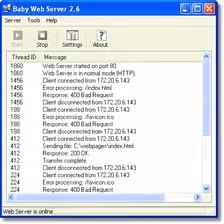
Baby Web Server is a lightweight HTTP server software designed to help users host simple websites, share files, and run basic web services directly from a Windows computer without requiring complex server configurations.
📌 What is Baby Web Server?
Baby Web Server is a compact and easy-to-use HTTP server application developed for users who need a simple web hosting environment without installing large or complicated server stacks. Unlike advanced enterprise web servers, Baby Web Server focuses on simplicity, lightweight performance, and quick setup.
The software allows users to host webpages directly from their computers using standard HTTP protocols. This means users can create small local websites, test HTML pages, share files across a network, or run lightweight web applications without purchasing web hosting services.
Baby Web Server is commonly used by:
- Beginner web developers
- Students learning web hosting concepts
- Local network administrators
- Small testing environments
- File sharing users
- Lightweight localhost projects
One of the biggest advantages of Baby Web Server is its simplicity. Most advanced web server platforms require extensive configuration involving databases, scripting engines, modules, and command-line tools. Baby Web Server reduces this complexity by providing a straightforward environment where users can quickly start serving webpages.
The software may support features such as:
- Basic HTTP hosting
- HTML page serving
- File sharing over browser access
- Localhost testing
- Lightweight networking tools
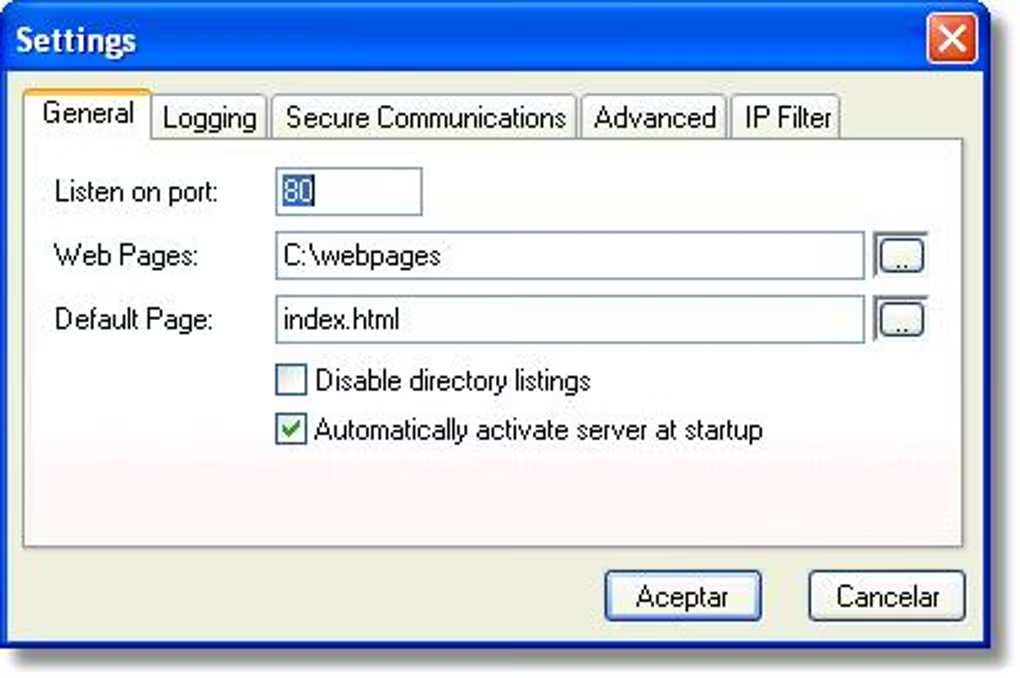
- Custom server port configuration
- Simple access management
Because of its lightweight design, Baby Web Server consumes very few system resources. This makes it useful for older computers or low-resource environments where larger server platforms may feel excessive.
However, Baby Web Server is generally intended for lightweight hosting and educational purposes rather than large-scale production hosting environments.
Overall, Baby Web Server acts as a simple and beginner-friendly web hosting solution for lightweight website serving and local network access.
💻 System Requirements (Detailed)
To run Baby Web Server smoothly, the following system requirements are recommended:
Minimum Requirements
- Operating System:
Windows XP / Windows 7 / Windows 8 / Windows 10 - Processor:
Intel Pentium or compatible processor - RAM:
Minimum 512MB RAM - Storage Space:
Around 50MB free disk space - Network:
Local network or internet connection for remote access - Browser:
Any modern web browser
Recommended Requirements
- Processor:
Intel Core i3 or equivalent - RAM:
2GB RAM or more - Storage:
SSD recommended for faster file access - Network:
Stable local area network for smoother connectivity - Display:
Standard HD resolution for easier server management
Best Suitable For
Baby Web Server is ideal for:
- Beginner web developers
- HTML learning projects
- Localhost testing
- Small internal company pages
- Local file sharing
- Educational demonstrations
- Lightweight personal websites
- Low-resource systems
🔄 Alternatives
If you want similar lightweight web server software, you can try:
- XAMPP
- WAMPServer
- HFS
- Mongoose
- Apache HTTP Server
❓ FAQ
Q1. What is Baby Web Server mainly used for?
It is used for lightweight website hosting and local file sharing.
Q2. Is Baby Web Server beginner-friendly?
Yes, it is designed for simplicity and easy setup.
Q3. Can it host professional websites?
It is mainly intended for lightweight or educational hosting purposes.
Q4. Does Baby Web Server support localhost testing?
Yes, it can be used for local website testing.
Q5. Is database support included?
Usually, Baby Web Server focuses mainly on basic HTTP hosting.
Q6. Can it run on older computers?
Yes, its lightweight design works well on older hardware.
Q7. Is internet required to use Baby Web Server?
No, local hosting can work entirely offline.
🔄 Best Alternatives
Features
- ✔️ Lightweight HTTP web server
- ✔️ Simple website hosting support
- ✔️ Local network file sharing
- ✔️ Beginner-friendly configuration
- ✔️ Low system resource usage
- ✔️ HTML webpage serving
- ✔️ Quick localhost testing
- ✔️ Custom port configuration
- ✔️ Easy setup process
- ✔️ Suitable for educational projects
- ✔️ Minimal installation requirements
- ✔️ Portable lightweight architecture
- ✔️ Supports browser-based access
- ✔️ Fast startup and shutdown
- ✔️ Useful for small internal websites
👍 Pros & 👎 Cons
Pros
- Extremely lightweight and fast
- Very easy for beginners to use
- Minimal system requirements
- Quick setup without complex configuration
- Good for localhost and educational testing
- Useful for temporary file sharing
- Runs well on older hardware
Cons
- Limited advanced server functionality
- Not suitable for large-scale production hosting
- Basic security compared to enterprise web servers
- May not support advanced scripting environments
- Limited scalability for high traffic websites
Expert Review
⭐ My Review
In my opinion, Baby Web Server is an excellent lightweight solution for users who need a simple web hosting environment without dealing with complex server configurations. The software is especially useful for beginners learning about local hosting and HTTP server functionality.
The biggest strength of Baby Web Server is simplicity. Users can quickly start serving webpages or sharing files with very little technical knowledge. It also performs well on low-end systems because of its minimal resource consumption.
Although it lacks advanced features found in enterprise-grade web servers like Apache or Nginx, Baby Web Server remains highly practical for educational projects, localhost testing, lightweight internal websites, and temporary file sharing environments.
If you need a fast, lightweight, and beginner-friendly HTTP server for simple web hosting tasks, Baby Web Server is definitely worth trying.
How to Install
⚙️ Installation Guide (Step-by-Step)
Follow these steps to install Baby Web Server:
Step 1: Download Baby Web Server
Download the software from a trusted source.
Step 2: Run the Installer
Open the setup file and allow administrator permissions if requested.
Step 3: Choose Installation Folder
Select where the software should be installed.
Step 4: Complete Installation
Click Install and wait for setup completion.
Step 5: Launch Baby Web Server
Open the application after installation.
Step 6: Configure Website Directory
Choose the folder containing your HTML files or shared content.
Step 7: Select Server Port
Set the HTTP port number if needed.
Step 8: Start the Web Server
Enable the server and wait for confirmation.
Step 9: Access the Website
Open a browser and visit:
http://localhostto view hosted pages locally.
Step 10: Share Access Across Network
Allow local network devices to connect if needed.
Apps Specs
Licence
Free
Latest Update
June 24, 2026
Platform
Windows
Downloads
2
Devlopers
Releted Searches
Top Downloads




Related Topics
Disclaimer
This content is provided for educational and informational purposes only. We do not host, store, or distribute any software files on our servers. All trademarks, product names, and logos belong to their respective owners.
We strongly recommend downloading software only from official websites or trusted sources. We are not responsible for any damage, data loss, or issues that may occur from the use of third-party software.
Users should ensure they comply with all applicable laws and software licensing agreements in their country before downloading or using any software mentioned on this website.
You may also like






Alternatives to



Expore Apps