- Development & IT
- Web devlopment
- Website Builder

Website Builder is a software platform or online tool that allows users to create websites easily using drag-and-drop editors, templates, and visual customization tools without requiring advanced coding skills.
📌 What is Website Builder?
Website Builder is a platform designed to help users create websites quickly and easily without manually writing complex code. These tools are commonly used by beginners, freelancers, businesses, bloggers, and online store owners who want professional-looking websites without hiring developers.
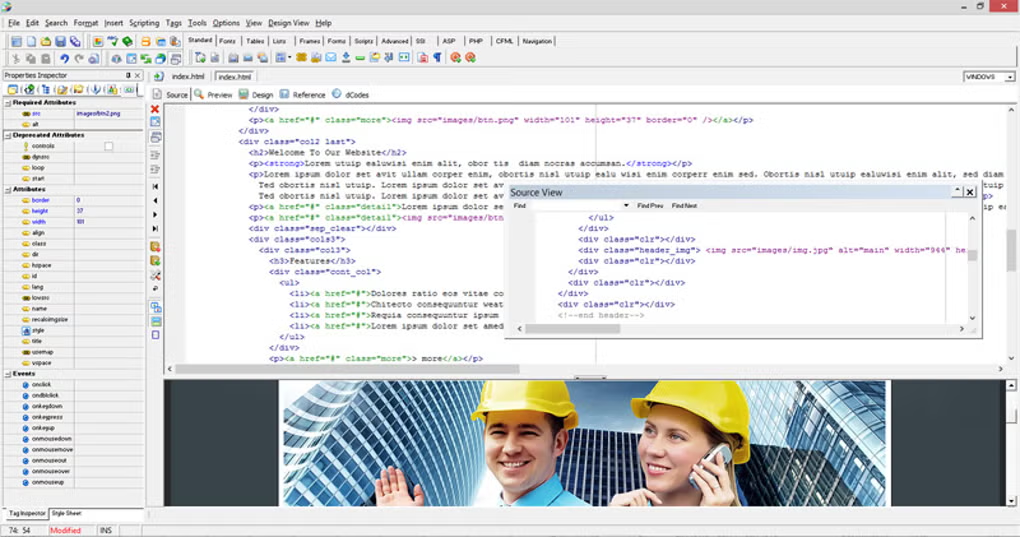
Traditionally, website development required knowledge of HTML, CSS, JavaScript, and server management. Website builders simplify this process by providing visual editing tools where users can drag and drop elements like text, images, buttons, videos, and forms directly onto a webpage.
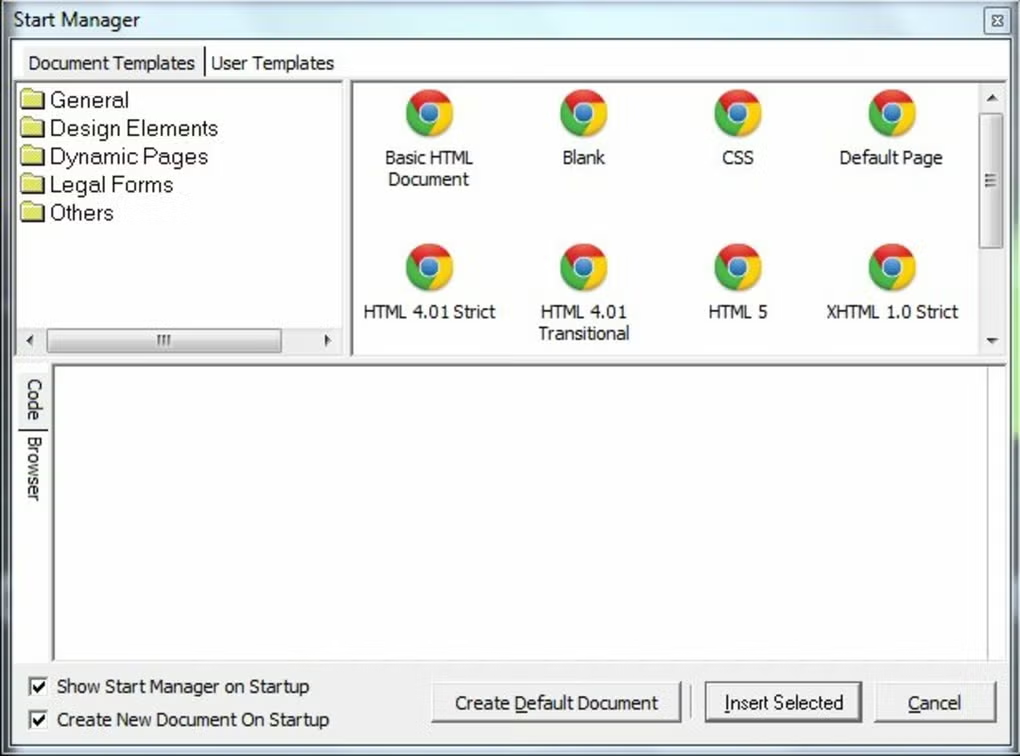
Most website builders also include ready-made templates that help users design websites faster. Templates are often categorized for blogs, portfolios, business websites, eCommerce stores, educational platforms, and personal pages.
Modern website builders usually provide hosting integration, mobile-responsive designs, SEO tools, and content management systems. This means users can build, manage, and publish websites from a single platform.
Some advanced builders also support online stores, payment integration, analytics, custom domains, and marketing tools. Because of these features, website builders are widely used for small business websites and online services.
One of the biggest advantages is speed and convenience. Users can create websites within hours instead of spending weeks learning development skills.
Overall, Website Builder platforms make web design accessible for everyone, from complete beginners to experienced professionals.
💻 System Requirements (Detailed)
Since most modern website builders are cloud-based, the requirements are relatively simple.
Minimum Requirements
- Operating System: Windows / macOS / Linux / ChromeOS
- Browser: Chrome, Edge, Firefox, or Safari
- RAM: Minimum 2GB RAM
- Internet: Stable internet connection required
- Display: Standard HD monitor resolution
Recommended Requirements
- RAM: 4GB–8GB RAM
- Browser: Latest version of Chrome or Edge
- Internet: High-speed broadband connection
- Display: Full HD monitor for easier editing and design work
Most website builders work directly in the browser and do not require heavy installation.
🔄 Alternatives
If you want popular website builder platforms, you can try:
- Wix
- Squarespace
- WordPress
- Webflow
❓ FAQ
Q1. What is a website builder mainly used for?
It is used for creating websites without advanced coding knowledge.
Q2. Do I need programming skills?
No, most website builders are designed for beginners.
Q3. Can I create an online store?
Yes, many website builders support eCommerce features.Q4. Are website builders mobile-friendly?
Yes, most modern templates are responsive.
Q5. Is hosting included?
Many website builders include hosting and domain support.
Features
- ✔️ Drag-and-drop website editor
- ✔️ Ready-made templates and themes
- ✔️ Mobile-responsive website design
- ✔️ Built-in SEO optimization tools
- ✔️ Hosting and domain integration
- ✔️ Customizable layouts and content
- ✔️ eCommerce support for online stores
- ✔️ Blogging and CMS functionality
- ✔️ Media and image management
- ✔️ Beginner-friendly interface
👍 Pros & 👎 Cons
Pros
- Easy for beginners
- No coding knowledge required
- Fast website creation process
- Professional templates available
- All-in-one website management solution
Cons
- Limited customization compared to custom coding
- Some advanced features require paid plans
- Platform dependency can limit flexibility
- Large websites may require more advanced solutions
Our Analysis
In my opinion, Website Builder platforms are one of the easiest ways to create professional websites quickly. They remove the complexity of coding and server management, making website creation accessible for almost everyone.
The drag-and-drop interface and ready-made templates save a huge amount of time, especially for beginners and small businesses. Features like hosting integration, SEO tools, and mobile responsiveness make them even more practical.
However, advanced developers may sometimes feel limited because of customization restrictions compared to fully coded websites. Still, for most personal, business, and portfolio websites, website builders provide an excellent balance of simplicity and functionality.
⚙️ How to Use Website Builder (Step-by-Step)
Step 1: Choose a Website Builder
Select a platform suitable for your needs.
Step 2: Create an Account
Sign up using your email address.
Step 3: Select a Template
Choose a template based on your website category.
Step 4: Customize the Design
Edit colors, text, images, menus, and layouts.
Step 5: Add Website Pages
Create pages such as Home, About, Contact, and Blog.
Step 6: Configure SEO and Settings
Set page titles, descriptions, and website settings.
Step 7: Connect Domain and Hosting
Attach your custom domain and hosting service.
Step 8: Publish the Website
Click Publish to make your website live online.
About SoftwareDownloading Editorial Team
The SoftwareDownloading Editorial Team researches Windows software, compatibility information, features, alternatives, and software-related guides for SoftwareDownloading.in.
Our pages are prepared using available product information and relevant documentation. When an application has not been personally tested, we distinguish research-based analysis from hands-on testing. Learn more about our review process
Apps Specs
Developer
Licence
Free
Version
V 4.0
Platform
Windows
Download Clicks
3
Page Reviewed
September 26, 2026
Top Downloads




Related Topics
Disclaimer
This content is provided for educational and informational purposes only. We do not host, store, or distribute any software files on our servers. All trademarks, product names, and logos belong to their respective owners.
We strongly recommend downloading software only from official websites or trusted sources. We are not responsible for any damage, data loss, or issues that may occur from the use of third-party software.
Users should ensure they comply with all applicable laws and software licensing agreements in their country before downloading or using any software mentioned on this website.