- Development & IT
- Networking
- Remote Explorer
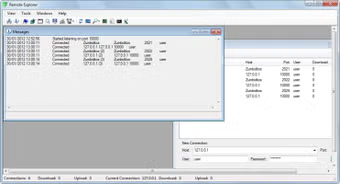
Remote Explorer is designed to simplify remote file access and management by allowing users to interact with files and folders on distant systems over a network.
It helps users:
- Manage remote files efficiently
- Transfer data between systems
- Access servers and shared resources
- Improve IT support workflows
- Reduce physical system dependency
- Enable remote administration tasks
The software is commonly popular among:
- IT administrators
- Network engineers
- System support teams
- Developers
- Server managers
- Remote workers
Depending on usage, users may get:
- Remote file browsing interface
- Secure file transfer system
- Network access tools
- Server management features
- Multi-system connectivity support
- Lightweight remote operations environment
📌 What is Remote Explorer?
Remote Explorer is a software tool used to access, manage, and transfer files on remote computers or servers over a network connection.
It allows users to control and browse remote systems as if they were working locally, making it useful for IT administration, file management, and remote support tasks.
The software helps users:
- Access remote files and folders
- Transfer data between systems
- Manage remote directories
- Connect to servers over a network
- Perform basic remote administration tasks
- Simplify cross-device file operations
It is commonly used by:
- IT administrators
- System engineers
- Network support teams
- Developers
- Server managers
- Remote support technicians
The application mainly focuses on:
- Remote file management
- Network-based system access
- Server administration support
- File transfer operations
- Remote connectivity tools
🚀 Key Uses
- Browsing files on remote computers
- Uploading and downloading data from servers
- Managing server directories
- Remote system maintenance
- Transferring project files between machines
- Supporting IT troubleshooting tasks
- Accessing office systems remotely
- Managing shared network resources
- Administering remote storage systems
- Simplifying cross-device file operations
💻 System Requirements (General)
Supported Platforms
- Windows
Basic Requirements
- 2GB RAM minimum
- Active network connection
- LAN or internet access
- Modern CPU
- Permissions for remote access
Recommended Requirements
- 4GB–8GB RAM
- Stable high-speed network
- SSD storage
- Updated Windows version
- Multi-user network environment
🔄 Alternatives
- FileZilla
- WinSCP
- Remote Desktop Connection (RDP)
- TeamViewer
- AnyDesk
- MobaXterm
- Cyberduck
- Rsync (Linux-based tools)
❓ FAQ
Q1. What is Remote Explorer used for?
It is used for accessing and managing files on remote systems over a network connection.
Q2. Is Remote Explorer the same as Remote Desktop?
No, Remote Explorer focuses on file access, while Remote Desktop provides full system control.
Q3. Can it transfer files between computers?
Yes, it supports file transfer between local and remote systems.
Q4. Is Remote Explorer secure?
Yes, it typically uses network authentication and secure connections depending on configuration.
Q5. Is it used for servers?
Yes, it is commonly used for managing server files and remote systems.
🔄 Best Alternatives
Features
✔ Remote file access
✔ File transfer between systems
✔ Directory management tools
✔ Network-based connectivity
✔ Server file browsing
✔ Secure authentication support
✔ Lightweight remote interface
✔ Multi-device support
✔ IT administration tools
✔ Cross-system file operations
✔ Simple remote navigation
✔ Workflow automation support
👍 Pros & 👎 Cons
Pros
- Easy remote file access
- Useful for IT support tasks
- Simplifies server management
- Fast file transfer capability
- Lightweight and practical
Cons
- Limited compared to full remote desktop tools
- Depends on network stability
- Security configuration required
- Not ideal for complex system control
- Windows-focused in many versions
Expert Review
Remote Explorer is a practical tool for remote file access and management, offering a simple and efficient way to handle files on remote systems without needing full desktop control.
Its strongest advantages are:
- Easy remote file navigation
- Useful for IT and server management
- Lightweight and efficient
- Good file transfer capabilities
It is best suited for IT administrators and system support teams, while full remote desktop solutions are better for complete system control tasks.
How to Install
⚙️ Usage Guide (General Overview)
Step 1: Install Remote Explorer
Install the tool on local and remote systems.
Step 2: Configure Connection
Enter IP address, credentials, or server details.
Step 3: Connect to Remote System
Establish a secure network connection.
Step 4: Browse Files
Access remote folders and directories.
Step 5: Transfer Files
Upload or download required data.
Step 6: Manage Resources
Organize or maintain remote files.
Apps Specs
Licence
Free
Latest Update
June 24, 2026
Platform
Windows
Downloads
Devlopers
Top Downloads
Related Topics
Disclaimer
This content is provided for educational and informational purposes only. We do not host, store, or distribute any software files on our servers. All trademarks, product names, and logos belong to their respective owners.
We strongly recommend downloading software only from official websites or trusted sources. We are not responsible for any damage, data loss, or issues that may occur from the use of third-party software.
Users should ensure they comply with all applicable laws and software licensing agreements in their country before downloading or using any software mentioned on this website.
You may also like
Alternatives to
Expore Apps