
LanFS is designed to simplify local file sharing by enabling direct communication between computers on the same network, allowing fast and efficient file transfers without cloud dependency.
It helps users:
- Transfer files quickly within LAN
- Reduce reliance on external storage
- Improve office and lab workflows
- Enable offline file sharing
- Simplify device-to-device communication
- Support collaborative environments
The software is commonly popular among:
- Office teams
- IT administrators
- Students
- Developers
- Home users
- Network engineers
Depending on usage, users may get:
- Shared folder access system
- Peer-to-peer transfer engine
- Network discovery tools
- Lightweight file manager
- LAN-based communication system
- Simple file exchange interface
📌 What is LanFS?
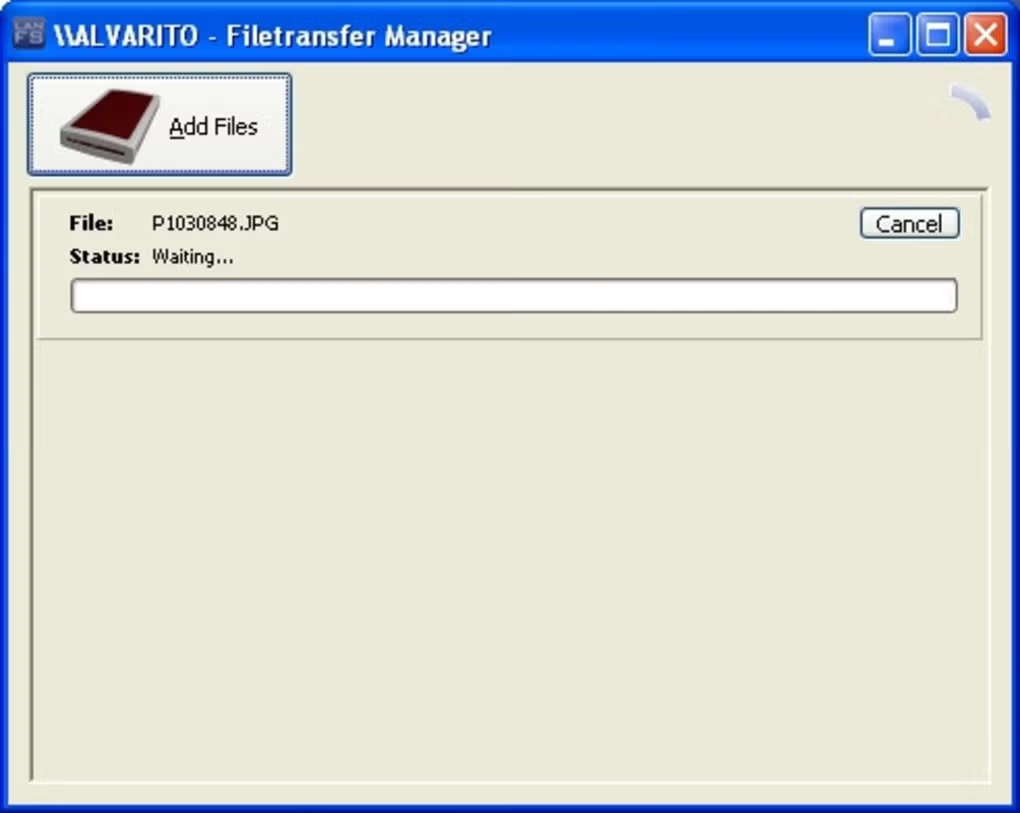
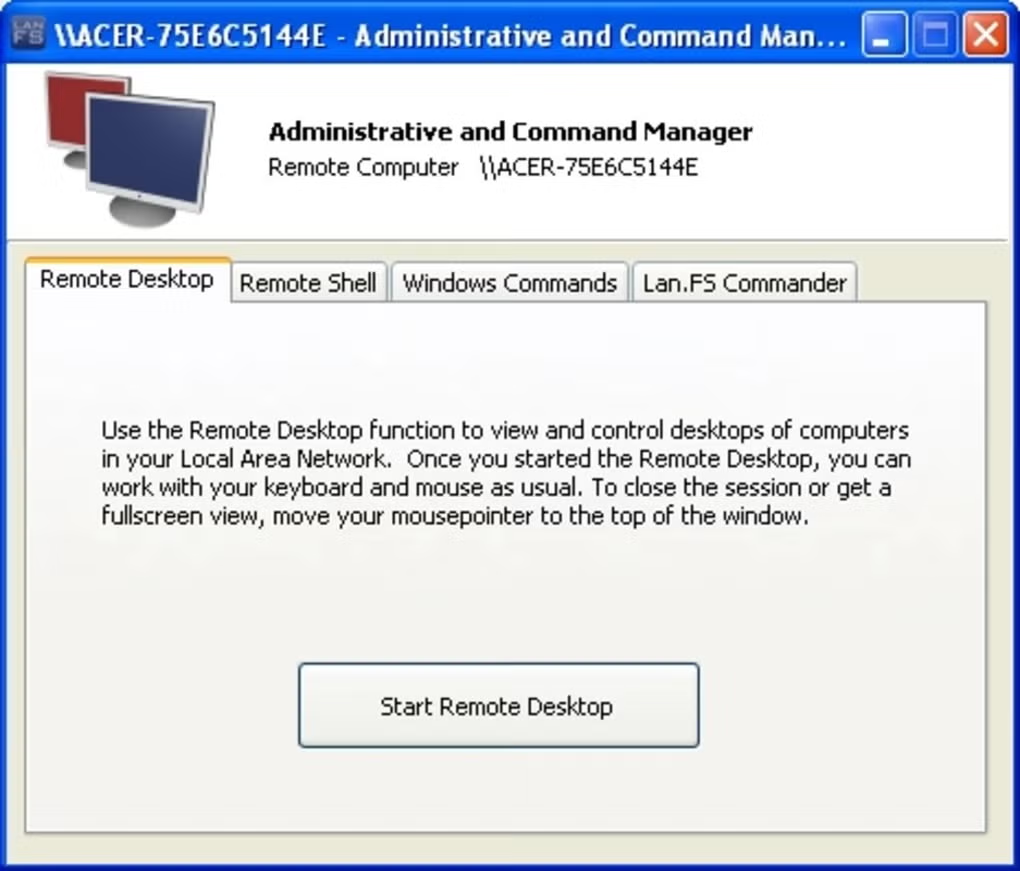
LanFS is a network-based file sharing tool designed to allow users to share files and folders directly over a Local Area Network (LAN) without using cloud services or external storage devices.
It works by creating a lightweight file-sharing environment where multiple computers on the same network can access, send, and receive files quickly.
The software helps users:
- Share files over LAN networks
- Transfer data between computers
- Access shared folders on local systems
- Avoid using USB drives for file transfer
- Enable peer-to-peer file sharing
- Simplify internal office or home network sharing
It is commonly used by:
- Office employees
- IT administrators
- Students in labs
- Home network users
- Developers
- Small businesses
The application mainly focuses on:
- LAN file sharing
- Peer-to-peer transfer
- Local network communication
- Shared folder management
- Offline file exchange systems
🚀 Key Uses
- Sharing documents between office PCs
- Transferring project files in LAN environments
- Moving media files between home computers
- Sharing resources in computer labs
- Avoiding cloud uploads for local transfers
- Enabling fast offline file exchange
- Supporting internal team collaboration
- Managing shared folders across systems
- Sending large files without internet dependency
- Simplifying network-based file access
💻 System Requirements (General)
Supported Platforms
- Windows
- Linux (depending on version/build)
Basic Requirements
- 1GB–2GB RAM minimum
- Active LAN or Wi-Fi network
- Network permissions enabled
- Modern CPU
- Shared network configuration
Recommended Requirements
- 4GB RAM or higher
- Gigabit LAN for faster transfers
- SSD storage
- Stable network infrastructure
- Multi-device environment
🔄 Alternatives
- WinSCP (local + remote transfer)
- FileZilla (LAN FTP sharing)
- Snapdrop
- Feem
- Dukto
- SHAREit
- Windows File Sharing (SMB)
- Nearby Share (Google)
❓ FAQ
Q1. What is LanFS used for?
It is used for sharing files between computers on the same local network.
Q2. Does LanFS require internet?
No, it works on LAN or Wi-Fi without internet access.
Q3. Is LanFS fast?
Yes, transfer speed depends on your local network (often very fast on LAN).
Q4. Can it share large files?
Yes, it can transfer large files depending on disk space and network speed.
Q5. Is LanFS secure?
Yes, it typically relies on local network access control, but security depends on network configuration.
Features
✔ LAN-based file sharing
✔ Peer-to-peer transfer system
✔ Offline file exchange support
✔ Fast local network transfers
✔ Shared folder access
✔ Lightweight architecture
✔ Multi-device support
✔ Simple file navigation
✔ No cloud dependency
✔ Secure local communication
✔ Drag-and-drop support (in some versions)
✔ Cross-platform compatibility (varies)
👍 Pros & 👎 Cons
Pros
- Very fast file transfers on LAN
- No internet required
- Simple and lightweight
- Good for office and lab environments
- Reduces need for USB drives
Cons
- Limited to local networks
- Requires network configuration
- No advanced cloud features
- Not suitable for remote access
- Basic interface compared to modern tools
Our Analysis
LanFS is a practical LAN file-sharing tool that provides fast and simple peer-to-peer file transfer capabilities within local networks, making it ideal for offline environments and internal collaboration.
Its strongest advantages are:
- Fast LAN-based transfers
- No internet dependency
- Simple file-sharing workflow
- Lightweight design
It is best suited for office, home, and educational environments, while enterprise systems may prefer more advanced managed file transfer solutions.
⚙️ Usage Guide (General Overview)
Step 1: Install LanFS
Install the software on all devices.
Step 2: Connect to Same Network
Ensure all systems are on the same LAN or Wi-Fi.
Step 3: Launch Application
Open LanFS on each device.
Step 4: Share Files
Select files or folders to share.
Step 5: Transfer Data
Send files across connected devices.
Step 6: Access Shared Files
Receive and store transferred data.
About SoftwareDownloading Editorial Team
The SoftwareDownloading Editorial Team researches Windows software, compatibility information, features, alternatives, and software-related guides for SoftwareDownloading.in.
Our pages are prepared using available product information and relevant documentation. When an application has not been personally tested, we distinguish research-based analysis from hands-on testing. Learn more about our review process
Apps Specs
Developer
Licence
Free
Version
V 2.4
Platform
Windows
Download Clicks
1
Page Reviewed
September 26, 2026
Top Downloads





Disclaimer
This content is provided for educational and informational purposes only. We do not host, store, or distribute any software files on our servers. All trademarks, product names, and logos belong to their respective owners.
We strongly recommend downloading software only from official websites or trusted sources. We are not responsible for any damage, data loss, or issues that may occur from the use of third-party software.
Users should ensure they comply with all applicable laws and software licensing agreements in their country before downloading or using any software mentioned on this website.