- Business & Productivity
- Document & Management
- HR Access Database Software
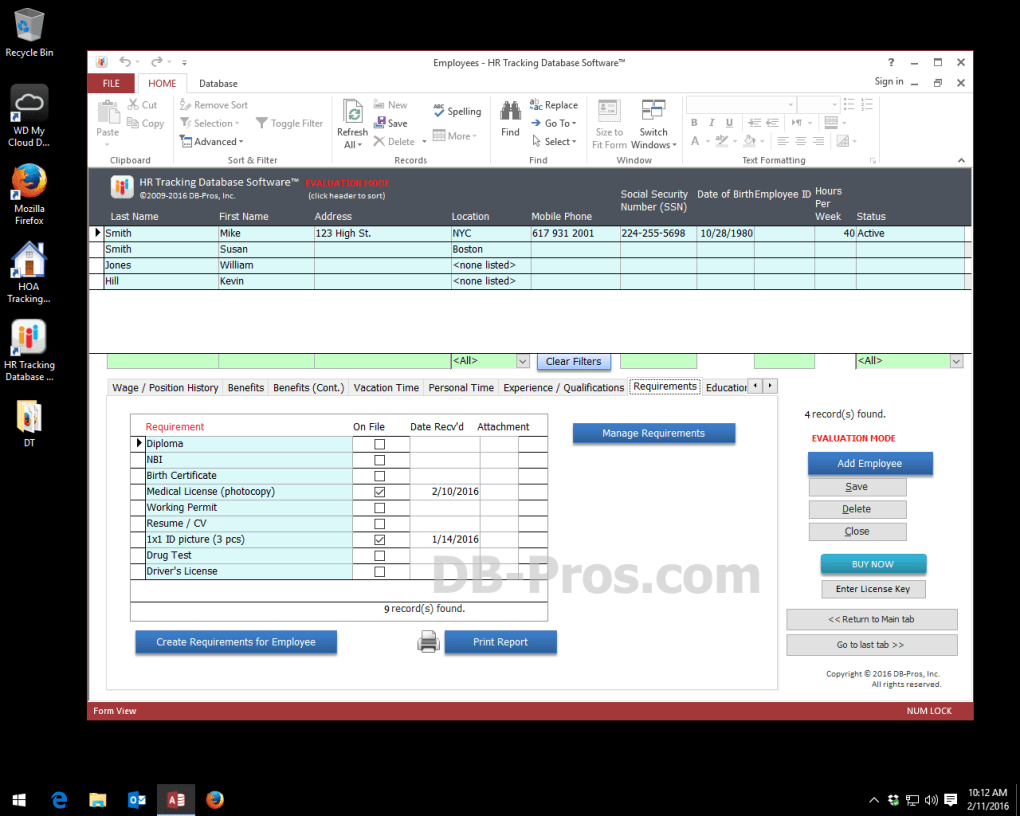
HR Access Database Software is designed to centralize employee information and simplify human resources administration workflows.
The software helps organizations:
- Store employee records securely
- Organize workforce data efficiently
- Track attendance and leave requests
- Manage recruitment workflows
- Generate HR reports and analytics
- Improve administrative productivity
It is commonly used in:
- Corporate offices
- Small and medium businesses
- Educational institutions
- Government organizations
- HR departments
- Workforce management environments
Depending on the version and deployment model, users may gain access to:
- Employee profile management
- Payroll and compensation tracking
- Recruitment and onboarding systems
- Leave and attendance monitoring
- Performance management workflows
- Reporting and analytics dashboards
- Role-based access control
One major advantage of HR Access Database Software is centralized workforce management because it organizes employee data into a structured digital system.
The software is especially useful for:
- HR managers
- Administrative staff
- Business owners
- Payroll departments
- Recruitment teams
- Organizational managers
who need efficient employee management tools.
📌 What is HR Access Database Software?
HR Access Database Software is a human resources management solution designed to help organizations store, organize, and manage employee information, HR records, payroll-related data, attendance, and workforce administration workflows.
The software is commonly used for:
- Employee database management
- HR record organization
- Staff attendance tracking
- Payroll and personnel management
- Recruitment and onboarding workflows
- Workforce reporting and administration
It is especially useful for businesses, HR departments, educational institutions, and organizations managing employee information digitally.
🚀 Key Uses
- Managing employee records
- Organizing HR databases
- Tracking attendance and leave
- Maintaining payroll-related information
- Handling recruitment workflows
- Managing onboarding documentation
- Storing employee profiles securely
- Generating HR reports
- Workforce administration tasks
- Simplifying human resources operations
💻 System Requirements (General)
Minimum Requirements
- Windows-based computer environment
- 4GB RAM minimum
- Dual-core processor
- Database storage support
- Office network or internet connectivity
Recommended Requirements
- 8GB–16GB RAM
- SSD storage for faster database operations
- Multi-core processor
- Secure backup infrastructure
- Stable office network environment
🔄 Alternatives
- BambooHR
- Zoho People
- SAP SuccessFactors
- OrangeHRM
- Workday
- ADP Workforce Now
- Odoo HR
❓ FAQ
Q1. What is HR Access Database Software used for?
It is used for managing employee records, HR operations, attendance, payroll information, and workforce administration.
Q2. Is it suitable for businesses and HR departments?
Yes, it is designed for organizational HR management workflows.
Q3. Can it store employee information securely?
Yes, employee database management is one of its main purposes.
Q4. Does it help with attendance tracking?
Yes, attendance and leave tracking are commonly supported features.
Q5. Is HR Access Database Software useful for payroll workflows?
Yes, many HR systems include payroll-related data management support.
🔄 Best Alternatives
Features
✔ Employee database management
✔ Attendance and leave tracking
✔ Payroll-related information management
✔ Recruitment and onboarding workflows
✔ HR reporting and analytics
✔ Secure employee profile storage
✔ Workforce administration tools
✔ Role-based access functionality
✔ Document and record organization
✔ Business and enterprise HR workflows
✔ Centralized employee management
✔ Beginner-friendly administrative interface
✔ Digital HR paperwork management
✔ Organizational workforce coordination tools
👍 Pros & 👎 Cons
Pros
- Centralized employee information management
- Simplifies HR administration workflows
- Useful attendance and reporting features
- Improves organizational efficiency
- Helpful for recruitment and onboarding
- Reduces manual paperwork dependency
Cons
- Initial setup may require configuration time
- Large organizations may need advanced enterprise customization
- Employee data security requires proper management
- Some advanced HR modules may require paid editions
- Staff training may be needed for full utilization
Expert Review
HR Access Database Software is a practical HR management solution for organizations needing centralized employee administration tools.
Its strongest advantages are:
- Organized workforce database management
- Useful attendance and HR tracking features
- Improved administrative efficiency
- Centralized employee record workflows
The software is especially useful for businesses and HR departments that need digital employee management systems and structured workforce organization.
While enterprise corporations may require highly customized HR ecosystems, HR Access Database Software performs well for general workforce administration and employee database management tasks.
Overall, it is a useful human resources and employee database management software for attendance tracking, workforce administration, recruitment workflows, payroll-related management, and digital HR operations.
How to Install
⚙️ Installation Guide (General Overview)
Step 1: Download Software
Download HR Access Database Software from official provider or trusted distributor.
Step 2: Prepare Database Environment
Configure:
- Database storage
- User permissions
- Backup systems
- Office network settings
Step 3: Install Application
Run installer and complete software setup.
Step 4: Configure Organization Settings
Set:
- Company information
- Departments
- Roles and permissions
- Attendance policies
Step 5: Create Employee Database
Add:
- Employee profiles
- Contact details
- HR records
- Payroll information
Step 6: Configure HR Modules
Enable:
- Attendance tracking
- Recruitment workflows
- Leave management
- Reporting systems
Step 7: Import Existing Records
Transfer old employee records if needed.
Step 8: Begin Workforce Management
Track:
- Staff attendance
- HR activities
- Employee documents
- Organizational workflows
Step 9: Generate Reports and Analytics
Use dashboards and reports for HR decision-making.
Step 10: Maintain Security and Backups
Protect employee data through regular backups and access control.
Apps Specs
Licence
Trial
Latest Update
June 24, 2026
Platform
Windows
Downloads
Devlopers
Top Downloads
Related Topics
Disclaimer
This content is provided for educational and informational purposes only. We do not host, store, or distribute any software files on our servers. All trademarks, product names, and logos belong to their respective owners.
We strongly recommend downloading software only from official websites or trusted sources. We are not responsible for any damage, data loss, or issues that may occur from the use of third-party software.
Users should ensure they comply with all applicable laws and software licensing agreements in their country before downloading or using any software mentioned on this website.
You may also like
Alternatives to
Expore Apps