- Development & IT
- Database
- xBaseView

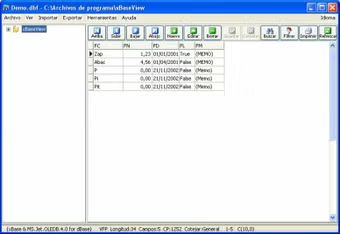
xBaseView is designed to simplify working with legacy xBase and DBF database files by providing a lightweight tool for viewing, editing, and exporting structured data.
It helps users:
- Maintain legacy database systems
- Edit DBF records easily
- Convert old database formats
- Inspect structured business data
- Support software migration projects
- Manage lightweight database operations
The software is commonly popular among:
- Database administrators
- Software developers
- IT professionals
- Legacy system maintainers
- Business data operators
- Data migration specialists
Depending on the version, users may get:
- DBF file editing tools
- Data export/import features
- Table structure viewing
- Database conversion utilities
- Record management features
- Lightweight database interface
- Legacy system compatibility tools
📌 What is xBaseView?
xBaseView is a database viewing and editing software designed to help users open, manage, and modify xBase database files such as DBF (dBase, FoxPro, Clipper) formats without requiring full database systems.
The software helps users:
- Open DBF/xBase database files
- View and edit table data
- Manage database records
- Export and import database content
- Convert database formats
- Analyze structured data
It is commonly used by:
- Database administrators
- Software developers
- Data analysts
- Legacy system users
- IT professionals
- Business data operators
The application mainly focuses on:
- xBase database management
- DBF file editing
- Data viewing and export
- Legacy database support
- Structured data handling
🚀 Key Uses
- Viewing DBF/xBase database files
- Editing table records
- Managing legacy database systems
- Exporting data to formats like CSV or Excel
- Importing structured data into databases
- Database maintenance and cleanup
- Data conversion between formats
- Analyzing structured business data
- Supporting old FoxPro / dBase systems
- Lightweight database inspection
💻 System Requirements (General)
Supported Platforms
- Microsoft Windows
Basic Requirements
- 2GB RAM minimum
- Basic processor
- Storage space for database files
- DBF/xBase file compatibility
- Standard Windows environment
Recommended Requirements
- 4GB+ RAM
- SSD storage
- Updated Windows OS
- Stable performance for large DBF files
- Better CPU for heavy datasets
🔄 Alternatives
- Microsoft Access
- DBF Viewer 2000
- OpenOffice Base
- LibreOffice Base
- DBeaver
- RazorSQL
- HeidiSQL
- Visual FoxPro (legacy)
❓ FAQ
Q1. What is xBaseView used for?
It is used to open, view, and edit DBF/xBase database files used in legacy database systems.
Q2. Can xBaseView edit database records?
Yes, it supports editing and managing table data directly.
Q3. Is it useful for modern databases?
It is mainly designed for legacy xBase systems, not modern cloud databases.
Q4. Does it support file conversion?
Yes, it can export data into formats like CSV, Excel, and other structured formats.
Q5. Is xBaseView beginner-friendly?
Yes, it is simple for basic database viewing and editing, but database knowledge helps for advanced use.
Features
✔ DBF/xBase file support
✔ Table editing functionality
✔ Data export to CSV/Excel
✔ Record management tools
✔ Database structure viewing
✔ Lightweight performance
✔ Legacy system compatibility
✔ Data import/export tools
✔ User-friendly interface
✔ Batch data handling support
✔ File conversion capabilities
✔ Structured data analysis
👍 Pros & 👎 Cons
Pros
- Easy DBF file editing
- Lightweight and fast
- Useful for legacy systems
- Supports data export formats
- Beginner-friendly interface
- Good for database inspection
Cons
- Limited to xBase/DBF systems
- Not suitable for modern cloud databases
- Advanced database features are limited
- Large datasets may slow performance
- Outdated database format focus
Our Analysis
xBaseView is a practical solution for users working with legacy DBF/xBase databases who need a simple tool for viewing, editing, and exporting structured data.
Its strongest advantages are:
- Simple DBF file management
- Lightweight performance
- Useful for legacy system support
- Easy data export capabilities
It is especially useful for database administrators, developers, and businesses maintaining older database systems or performing data migration tasks.
However, users working with modern relational or cloud databases may prefer more advanced database management tools.
⚙️ Usage Guide (General Overview)
Step 1: Install Software
Install xBaseView on Windows.
Step 2: Open DBF File
Load xBase or DBF database files.
Step 3: View Data
Inspect tables, rows, and columns.
Step 4: Edit Records
Modify or update database entries.
Step 5: Export Data
Save data into CSV, Excel, or other formats.
Step 6: Manage Database
Perform cleanup or organization tasks.
Step 7: Continue Workflow
Use for ongoing legacy database maintenance.
About SoftwareDownloading Editorial Team
The SoftwareDownloading Editorial Team researches Windows software, compatibility information, features, alternatives, and software-related guides for SoftwareDownloading.in.
Our pages are prepared using available product information and relevant documentation. When an application has not been personally tested, we distinguish research-based analysis from hands-on testing. Learn more about our review process
Apps Specs
Developer
Licence
Paid
Version
7.2 Pro Build 0661
Platform
Windows
Download Clicks
4
Page Reviewed
June 24, 2026
Releted Searches
Top Downloads





Related Topics
Disclaimer
This content is provided for educational and informational purposes only. We do not host, store, or distribute any software files on our servers. All trademarks, product names, and logos belong to their respective owners.
We strongly recommend downloading software only from official websites or trusted sources. We are not responsible for any damage, data loss, or issues that may occur from the use of third-party software.
Users should ensure they comply with all applicable laws and software licensing agreements in their country before downloading or using any software mentioned on this website.