
- Utilities & Tools
- Barcode Scanning
- Barcode Label Maker
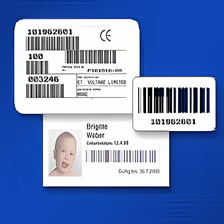
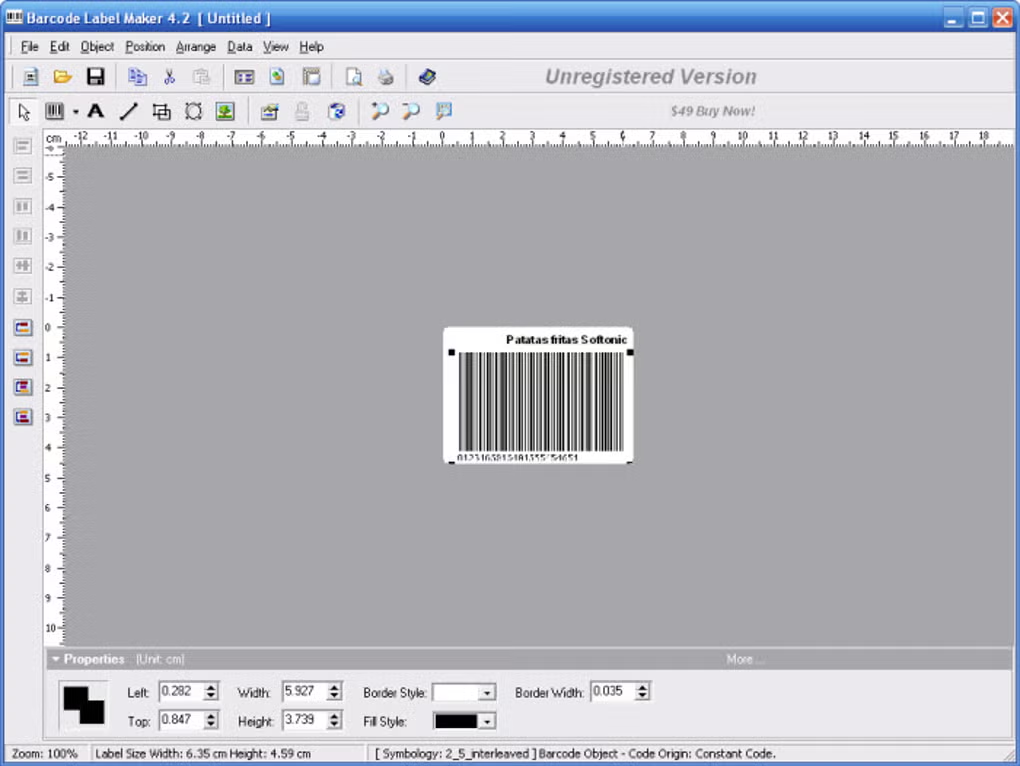
A Barcode Label Maker is a software tool used to create, customize, and print barcode labels for products, inventory systems, retail stores, warehouses, shipping operations, libraries, healthcare systems, and asset management workflows.
These tools help businesses automate product identification and improve tracking accuracy through machine-readable barcode systems.
📌 What is a Barcode Label Maker?
A Barcode Label Maker is a software application designed to generate and print barcode labels for products, assets, inventory, books, packages, and organizational systems.
Barcodes are machine-readable visual codes that store identification information such as:
- Product IDs
- Serial numbers
- Inventory codes
- ISBN numbers
- Asset tags
- Shipping details
The software is commonly used for:
- Product labeling
- Inventory management
- Retail operations
- Warehouse organization
- Asset tracking
- Shipping workflows
- Library systems
- Healthcare inventory systems
One of the biggest strengths of barcode systems is automation efficiency.
Instead of manually entering data, barcode scanners can instantly retrieve information from labels.
Barcode Label Maker software is commonly used by:
- Retail stores
- Warehouses
- Libraries
- Schools
- Hospitals
- Logistics companies
- Manufacturing businesses
- Offices
Depending on the software version, features may include:
- Barcode generation
- Label printing
- QR code support
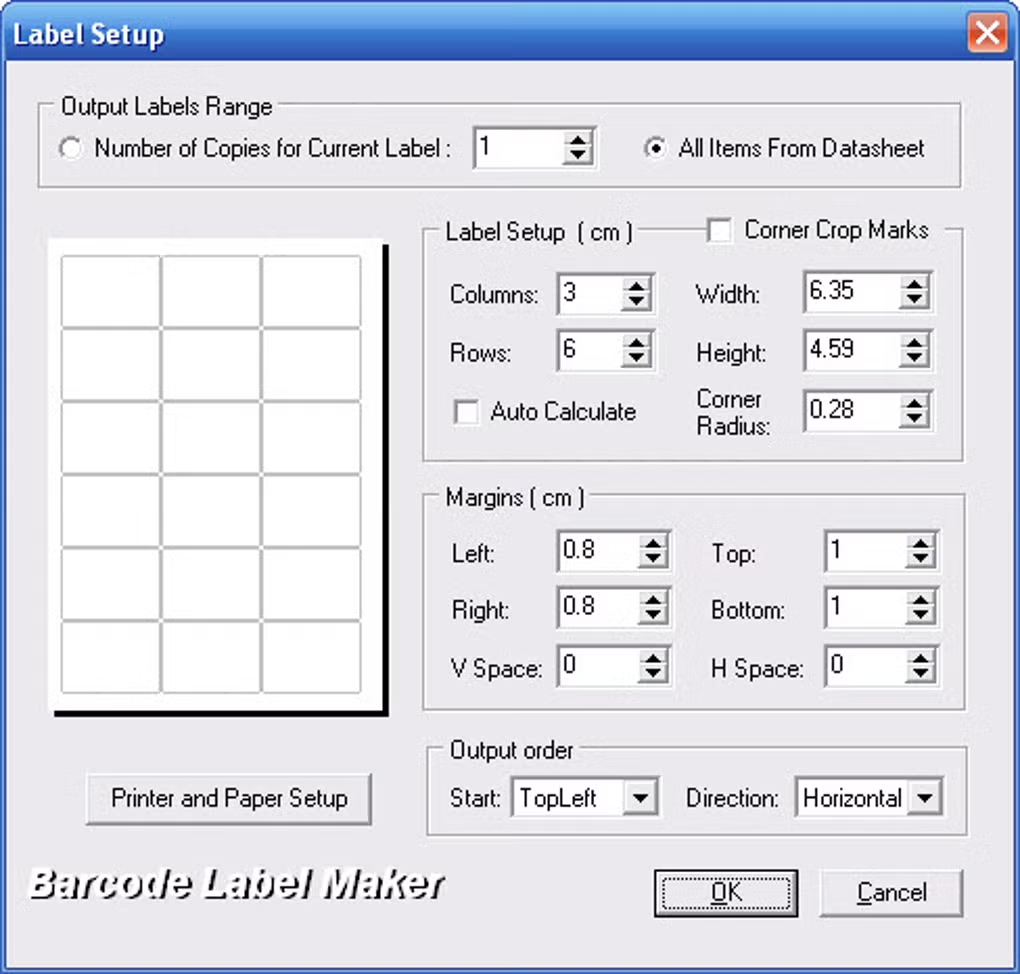
- Batch label creation
- Product numbering
- Database integration
- Barcode resizing
- Print preview systems
- Sequential numbering
- Inventory labeling
- Thermal printer compatibility
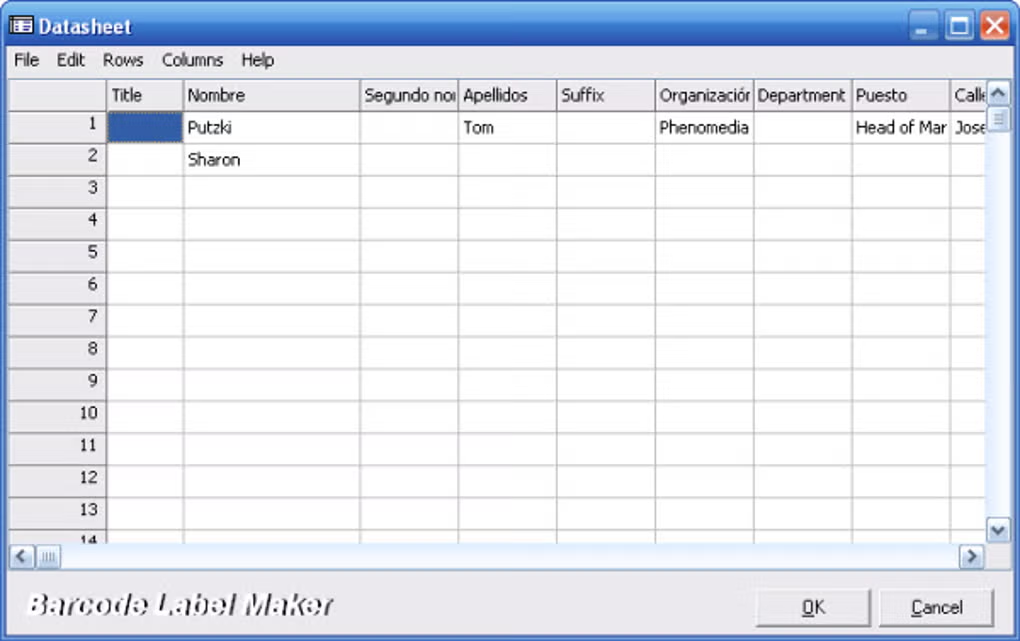
- CSV import support
- Custom label templates
- Image export functionality
- Multi-format barcode support
The software may support barcode standards such as:
- UPC
- EAN
- Code 39
- Code 128
- ISBN
- QR codes
- Data Matrix
- PDF417
One major feature is inventory management integration.
Businesses use barcode labels for:
- Stock tracking
- Product management
- Checkout systems
- Warehouse organization
- Asset identification
Another important use case is shipping and logistics.
Shipping labels often contain:
- Tracking barcodes
- Order numbers
- Package identifiers
- Delivery routing data
Libraries also rely heavily on barcode systems for:
- Book tracking
- Membership cards
- Circulation systems
Healthcare organizations may use barcode labels for:
- Medicine tracking
- Patient identification
- Laboratory samples
- Medical equipment management
Modern Barcode Label Maker software may support:
- Thermal label printers
- Laser printers
- Inkjet printers
- Barcode scanners
- POS systems
- ERP integration
Some advanced enterprise systems also include:
- RFID compatibility
- Cloud synchronization
- Mobile label printing
- API integration
- Automated inventory workflows
The software is generally available as:
- Windows desktop software
- Cloud-based web applications
- Mobile applications
- Enterprise inventory systems
Popular barcode label solutions include:
- Bartender
- NiceLabel
- Labeljoy
- TEC-IT Barcode Studio
- Zint Barcode Studio
However, users should also understand several important considerations.
Barcode readability depends heavily on:
- Print quality
- Label size
- Scanner compatibility
- Proper barcode formatting
Poor-quality labels may fail scanning systems.
Another important factor is barcode standard selection.
Different industries use different formats:
- Retail → UPC/EAN
- Warehouses → Code 128
- Libraries → ISBN/Code 39
- Shipping → QR/Data Matrix/PDF417
Large organizations may also require integration with:
- ERP systems
- POS systems
- Warehouse management platforms
- Inventory databases
Overall, Barcode Label Maker software acts as a barcode generation and label-printing solution designed to improve inventory management, tracking efficiency, and organizational workflows across multiple industries.
💻 System Requirements (General)
Minimum Requirements
- Operating System:
Windows / Linux / macOS - Processor:
Dual-core processor - RAM:
Minimum 2GB–4GB RAM - Storage:
500MB+ available storage - Printer Support:
Thermal, laser, or inkjet printers
Recommended Requirements
- Processor:
Intel Core i5 / Ryzen 5 or higher - RAM:
8GB RAM or more - Storage:
SSD recommended - Additional Hardware:
- Barcode scanners
- Thermal label printers
- POS systems
- RFID readers
🔄 Alternatives
Popular Barcode Label Maker software includes:
- Bartender
- NiceLabel
- Labeljoy
- TEC-IT Barcode Studio
- Zint Barcode Studio
❓ FAQ
Q1. What is Barcode Label Maker mainly used for?
It is mainly used for generating and printing barcode labels.
Q2. Can it create QR codes?
Yes, many modern barcode tools support QR code generation.
Q3. Are barcode scanners required?
Scanners are optional but important for inventory workflows.
Q4. Which industries use barcode systems?
Retail, logistics, healthcare, libraries, and warehouses commonly use them.
Q5. Why are thermal printers popular for barcode labels?
They produce durable, high-quality barcode labels efficiently.
Q6. Can barcode software integrate with inventory systems?
Yes, many advanced systems support database and ERP integration.
Q7. Does print quality affect barcode scanning?
Yes, poor-quality labels may fail scanning systems.
Features
- ✔️ Barcode generation tools
- ✔️ Label printing support
- ✔️ QR code creation
- ✔️ Multiple barcode format support
- ✔️ Inventory management labels
- ✔️ Batch barcode printing
- ✔️ Sequential numbering systems
- ✔️ Database integration
- ✔️ Custom label templates
- ✔️ Thermal printer compatibility
- ✔️ Barcode resizing tools
- ✔️ Product tracking support
- ✔️ Shipping label creation
- ✔️ Asset tracking functionality
- ✔️ Windows and enterprise compatibility
👍 Pros & 👎 Cons
Pros
- Improves inventory tracking
- Reduces manual entry errors
- Speeds up checkout and scanning
- Useful for many industries
- Supports multiple barcode standards
- Helps organize warehouses and assets
- Simplifies shipping workflows
- Improves operational efficiency
Cons
- Requires compatible scanners and printers
- Poor print quality affects readability
- Advanced enterprise integrations may be costly
- Some systems require staff training
- Large databases require maintenance
- Enterprise solutions can become complex
Our Analysis
In my opinion, Barcode Label Maker software is extremely valuable because barcode systems have become essential across almost every inventory-driven industry.
One of the biggest strengths is operational efficiency. Barcode-based workflows dramatically reduce manual data entry errors while speeding up tracking and checkout operations.
Small businesses especially benefit because barcode systems help organize products and inventory professionally without needing expensive enterprise infrastructure.
The ability to generate:
- Product labels
- Shipping labels
- Asset tags
- Library barcodes
makes these tools useful across many industries.
Thermal printer compatibility is another important advantage because thermal labels are durable and highly scannable.
However, businesses should understand that barcode systems are only as reliable as their implementation quality. Poor printer calibration, low-quality labels, or incorrect barcode standards can easily create scanning problems.
Larger organizations may eventually require advanced integrations with ERP or warehouse systems.
For inventory management, product tracking, and organizational workflows, Barcode Label Maker software remains one of the most practical and widely useful business tools available.
⚙️ Installation Guide (General Overview)
Step 1: Install the Software
Download and install the Barcode Label Maker application.
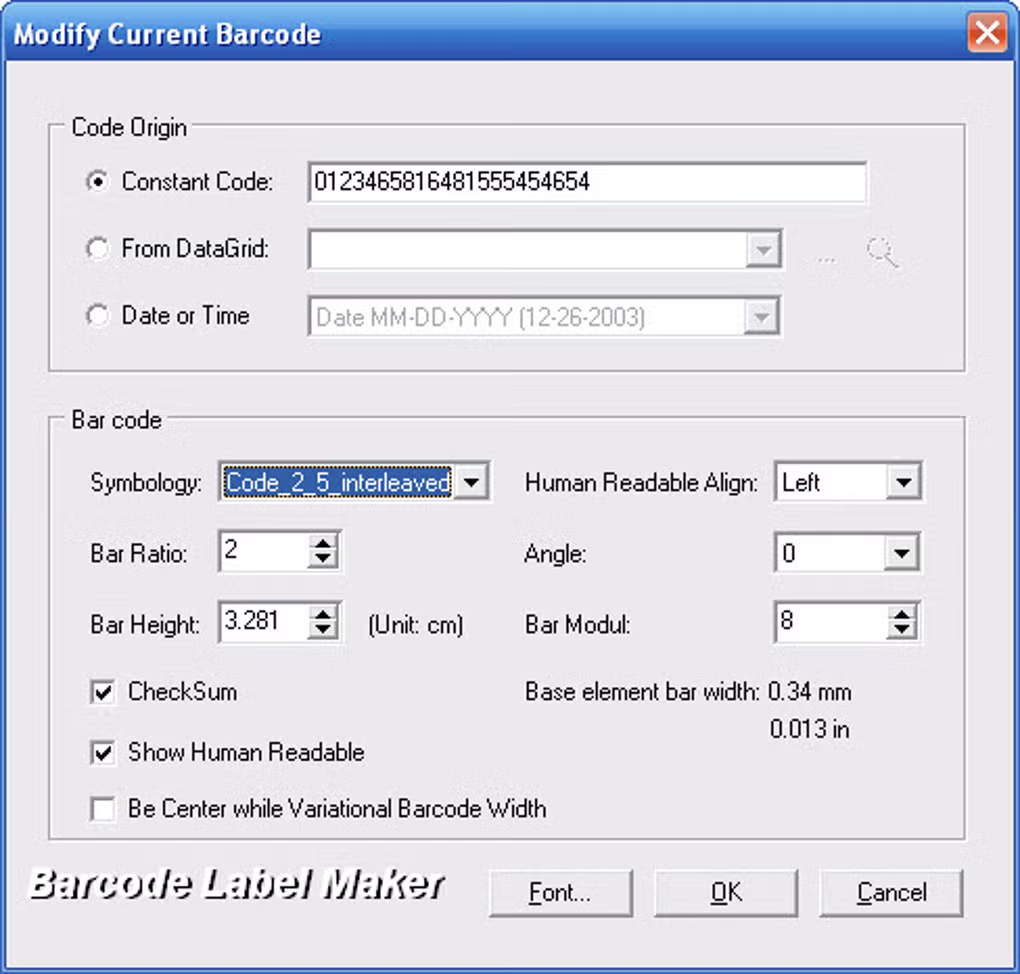
Step 2: Select Barcode Type
Choose the required barcode format such as:
- UPC
- EAN
- Code 128
- QR Code
Step 3: Enter Product or Asset Data
Add:
- Product codes
- Serial numbers
- ISBNs
- Tracking IDs
Step 4: Customize Label Layout
Adjust:
- Fonts
- Barcode size
- Label dimensions
- Images and logos
Step 5: Preview the Labels
Verify readability and layout alignment.
Step 6: Configure Printer Settings
Select compatible:
- Thermal printers
- Laser printers
- Inkjet printers
Step 7: Print Barcode Labels
Generate physical barcode labels.
Step 8: Test Barcode Scanning
Verify labels with barcode scanners.
Step 9: Organize Inventory or Assets
Apply labels to products or systems.
Step 10: Maintain Backup Records
Keep inventory and label databases backed up.
About SoftwareDownloading Editorial Team
The SoftwareDownloading Editorial Team researches Windows software, compatibility information, features, alternatives, and software-related guides for SoftwareDownloading.in.
Our pages are prepared using available product information and relevant documentation. When an application has not been personally tested, we distinguish research-based analysis from hands-on testing. Learn more about our review process
Apps Specs
Developer
Licence
Trial
Version
4.2
Platform
Windows
Download Clicks
3
Page Reviewed
September 27, 2026
Top Downloads


Related Topics
Disclaimer
This content is provided for educational and informational purposes only. We do not host, store, or distribute any software files on our servers. All trademarks, product names, and logos belong to their respective owners.
We strongly recommend downloading software only from official websites or trusted sources. We are not responsible for any damage, data loss, or issues that may occur from the use of third-party software.
Users should ensure they comply with all applicable laws and software licensing agreements in their country before downloading or using any software mentioned on this website.
This Post Has One Comment
Pingback: 2 Specialized Windows Tools That Solve Real-World Problems