- Business & Productivity
- Remote PC
- VMware Workstation Pro
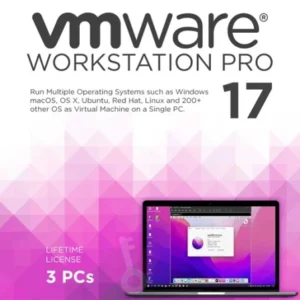
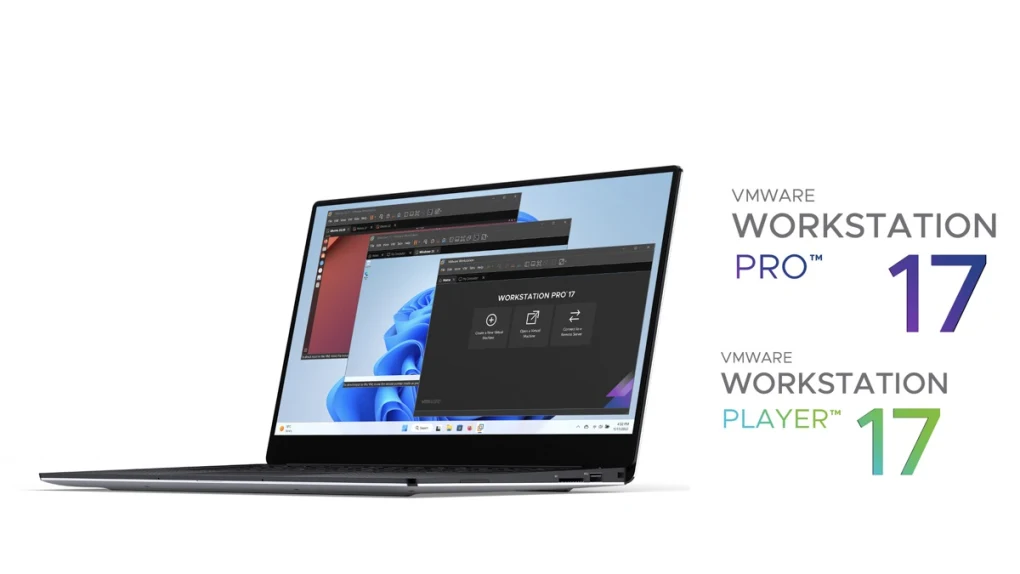
VMware Workstation Pro is designed for advanced virtualization, allowing users to create and manage multiple virtual computers on a single physical machine.
It helps users:
- Run different operating systems simultaneously
- Test applications safely
- Build virtual development environments
- Simulate networks and servers
- Improve software testing workflows
- Learn operating systems without risk
It is commonly used in:
- Software development
- Cybersecurity labs
- IT training environments
- Server simulation
- Application testing
- DevOps workflows
Depending on configuration, users may get:
- Snapshots and rollback features
- Virtual networking tools
- Shared folders between host and VM
- Drag-and-drop file transfer
- Multi-VM management
- Advanced hardware simulation
- Cloning of virtual machines
📌 What is VMware Workstation Pro?
VMware Workstation Pro is a powerful virtualization software that allows users to run multiple operating systems on a single computer as virtual machines (VMs).
It is widely used by developers, IT professionals, and testers to create isolated environments for running different OS versions without affecting the main system.
Common users include:
- Software developers
- IT administrators
- Cybersecurity professionals
- Test engineers
- Students learning networking/OS
🚀 Key Uses
- Running multiple operating systems on one PC
- Testing software in isolated environments
- Running Linux on Windows (or vice versa)
- Cybersecurity and malware analysis
- Creating virtual labs for learning
- System development and debugging
- Snapshot-based system recovery testing
- Network simulation and configuration testing
- Legacy OS support
- Server environment simulation
💻 System Requirements (General)
Supported Platforms
- Microsoft Windows (primary host OS)
- Linux (host support available in some versions)
Basic Requirements
- 64-bit CPU with virtualization support (Intel VT-x / AMD-V)
- 4GB RAM minimum (8GB+ recommended)
- 1–2GB disk space for installation
- Additional storage for virtual machines
- BIOS/UEFI virtualization enabled
Recommended Requirements
- 8GB–16GB+ RAM
- SSD storage
- Multi-core processor
- 20GB+ free space per VM
- Dedicated GPU (optional for heavy workloads)
🔄 Alternatives
- VirtualBox
- VMware Player (free version)
- Hyper-V (Windows Pro/Enterprise)
- Parallels Desktop (macOS)
- QEMU
- Proxmox (server virtualization)
❓ FAQ
Q1. What is VMware Workstation Pro used for?
It is used to run multiple operating systems on one computer using virtual machines.
Q2. Is it free?
It is a paid software, but VMware sometimes offers free personal-use versions or trials.
Q3. Does it slow down the PC?
Yes, if system resources (RAM/CPU) are limited.
Q4. Can I run Windows and Linux together?
Yes, multiple OS can run simultaneously in separate VMs.
Q5. Is it safe?
Yes, virtual machines are isolated from the host system.
Features
✔ Run multiple OS on one PC
✔ Snapshot and rollback system
✔ Virtual networking support
✔ Drag-and-drop file sharing
✔ USB device support
✔ High-performance virtualization
✔ Multi-VM management
✔ Secure isolated environments
✔ 3D graphics support (limited)
✔ Cloning of virtual machines
✔ Advanced configuration options
✔ Enterprise-grade tools
👍 Pros & 👎 Cons
Pros
- Extremely powerful virtualization tool
- Ideal for developers and IT professionals
- Stable and reliable performance
- Supports many operating systems
- Advanced snapshot system
- Strong enterprise features
Cons
- Paid software
- Requires high system resources
- Not beginner-friendly
- Complex setup for advanced features
- Heavy RAM and CPU usage
Our Analysis
VMware Workstation Pro is one of the most powerful virtualization tools available for professionals.
Its strongest advantages are:
- Excellent virtualization performance
- Advanced snapshot and cloning system
- Ideal for developers and IT labs
- Supports multiple OS environments
It is especially useful for users who need professional-grade virtual machines for testing, development, and cybersecurity work.
However, it requires strong hardware and is not ideal for casual users.
⚙️ Installation Guide (General Overview)
Step 1: Download Software
Install VMware Workstation Pro from official VMware website.
Step 2: Enable Virtualization
Turn on Intel VT-x / AMD-V in BIOS/UEFI.
Step 3: Install Application
Run setup on Microsoft Windows.
Step 4: Create Virtual Machine
Choose OS (Windows/Linux/etc.).
Step 5: Allocate Resources
Set RAM, CPU, and storage.
Step 6: Install Guest OS
Load OS ISO file.
Step 7: Configure Network
Set NAT or bridged mode.
Step 8: Install VMware Tools
Improve performance and integration.
Step 9: Take Snapshots
Save system states for recovery.
Step 10: Start Using VM
Run multiple OS environments.
About SoftwareDownloading Editorial Team
The SoftwareDownloading Editorial Team researches Windows software, compatibility information, features, alternatives, and software-related guides for SoftwareDownloading.in.
Our pages are prepared using available product information and relevant documentation. When an application has not been personally tested, we distinguish research-based analysis from hands-on testing. Learn more about our review process
Apps Specs
Developer
Licence
Trial
Version
17
Platform
Windows
Download Clicks
2
Page Reviewed
September 26, 2026
Top Downloads





Related Topics
Disclaimer
This content is provided for educational and informational purposes only. We do not host, store, or distribute any software files on our servers. All trademarks, product names, and logos belong to their respective owners.
We strongly recommend downloading software only from official websites or trusted sources. We are not responsible for any damage, data loss, or issues that may occur from the use of third-party software.
Users should ensure they comply with all applicable laws and software licensing agreements in their country before downloading or using any software mentioned on this website.