- Development & IT
- IDEs/Source Editors
- RStudio Desktop

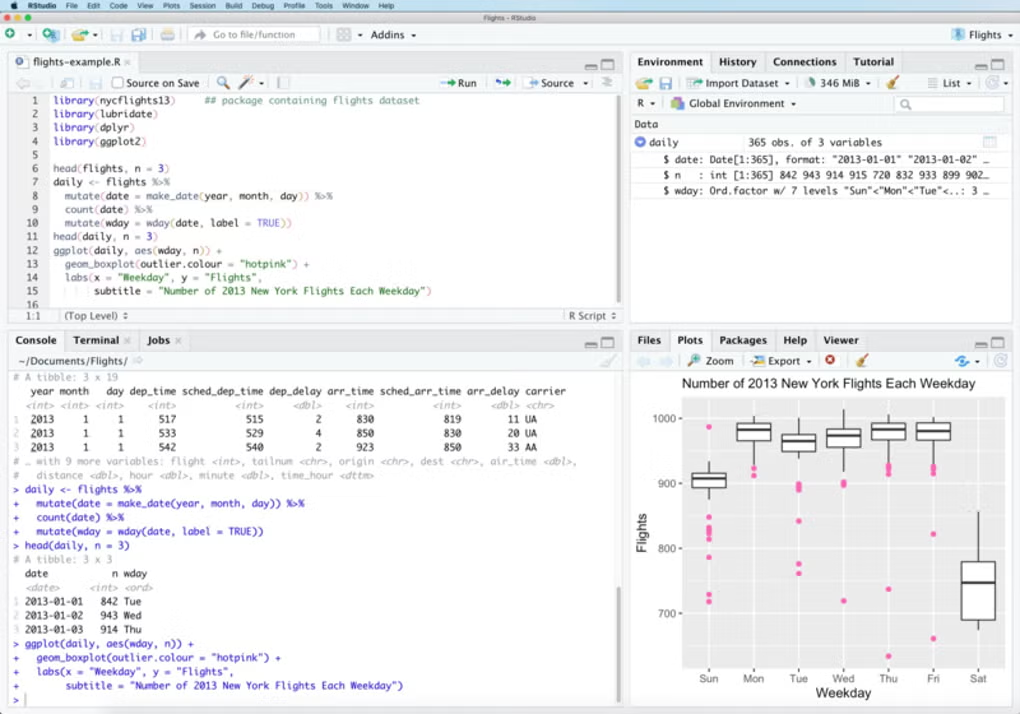
RStudio Desktop is designed to provide a complete and efficient local development environment for R programming, statistical computing, machine learning, and interactive data analysis.
It helps users:
- Analyze datasets efficiently
- Build statistical models
- Create reproducible research workflows
- Visualize complex data
- Learn R programming
- Improve productivity in analytics projects
The software is commonly popular among:
- Data scientists
- Researchers
- Universities
- Analysts
- Students
- Machine learning practitioners
Depending on usage, users may get:
- Integrated R console and editor
- Visualization tools
- Package management systems
- Data science project workflows
- Script execution and debugging tools
- Reproducible research support
📌 What is RStudio Desktop?
RStudio Desktop is a desktop integrated development environment (IDE) designed for R programming, statistical computing, data analysis, and data science workflows on local systems.
The software helps users:
- Write and run R code
- Perform statistical analysis
- Create charts and visualizations
- Manage data science projects
- Develop machine learning workflows
- Work with datasets efficiently
It is commonly used by:
- Data scientists
- Researchers
- Statisticians
- Students
- Analysts
- Academic institutions
The application mainly focuses on:
- R programming
- Data science workflows
- Statistical computing
- Data visualization
- Local analytics development
🚀 Key Uses
- Running R scripts locally
- Performing statistical analysis
- Building data science projects
- Creating charts and reports
- Working with machine learning libraries
- Teaching statistics and analytics
- Managing datasets and research projects
- Developing reproducible analysis workflows
- Exploring data interactively
- Academic and business analytics work
💻 System Requirements (General)
Supported Platforms
- Windows
- Linux
- macOS
Basic Requirements
- 2GB–4GB RAM minimum
- Modern CPU
- R programming language installation
- Storage space for datasets and projects
- Stable operating system
Recommended Requirements
- 8GB RAM or higher
- SSD storage
- Multi-core processor
- Updated operating system
- Additional memory for large datasets
🔄 Alternatives
- Jupyter Notebook
- VS Code with R extensions
- Spyder
- MATLAB
- SAS Studio
- Posit Workbench
- Apache Zeppelin
- DataSpell
❓ FAQ
Q1. What is RStudio Desktop used for?
It is used for R programming, statistical analysis, data science, visualization, and analytics workflows on desktop systems.
Q2. Is RStudio Desktop beginner-friendly?
Yes, it provides a user-friendly environment suitable for both beginners and advanced R users.
Q3. Does RStudio Desktop require R installation?
Yes, users must install the R programming language separately before using RStudio Desktop.
Q4. Can RStudio Desktop create visualizations?
Yes, it supports charts, graphs, and advanced data visualization workflows using R packages.
Q5. Is RStudio Desktop free?
Yes, there are free open-source editions available along with commercial enterprise solutions.
Features
✔ Integrated R development environment
✔ Statistical computing support
✔ Data visualization tools
✔ Script editor and console
✔ Package and library management
✔ Data science workflow support
✔ Machine learning compatibility
✔ Project organization tools
✔ Debugging and execution support
✔ Reproducible research workflows
✔ Cross-platform compatibility
✔ Interactive analytics environment
👍 Pros & 👎 Cons
Pros
- Excellent R programming support
- Strong data science ecosystem integration
- Good visualization workflow
- Beginner-friendly interface
- Free open-source availability
Cons
- Primarily focused on R language workflows
- Large datasets may require strong hardware
- Some advanced enterprise features require paid solutions
- Learning curve for statistical programming
- Limited support for non-R development workflows
Our Analysis
🏁 expert review :
RStudio Desktop is one of the most widely used environments for R programming and data science, offering a highly productive workflow for analytics, research, machine learning, and statistical computing.
Its strongest advantages are:
- Excellent R ecosystem integration
- Strong data visualization tools
- Efficient analytics workflow
- Good balance between beginner and advanced usability
It is best suited for data scientists, researchers, students, and analytics professionals working heavily with R programming and statistical workflows, while users requiring broader multi-language development environments may prefer more general-purpose IDE platforms.
⚙️ Usage Guide (General Overview)
Step 1: Install R
Download and install the R programming language.
Step 2: Install RStudio Desktop
Install RStudio Desktop on your operating system.
Step 3: Open the IDE
Launch the RStudio Desktop interface.
Step 4: Create or Import Projects
Load datasets or start a new analytics project.
Step 5: Write and Run R Code
Execute scripts, perform analysis, and create visualizations.
Step 6: Export Results
Save reports, scripts, charts, and project outputs.
About SoftwareDownloading Editorial Team
The SoftwareDownloading Editorial Team researches Windows software, compatibility information, features, alternatives, and software-related guides for SoftwareDownloading.in.
Our pages are prepared using available product information and relevant documentation. When an application has not been personally tested, we distinguish research-based analysis from hands-on testing. Learn more about our review process
Apps Specs
Developer
Licence
Free
Version
V 2022.02.0+443
Platform
Windows
Download Clicks
1
Page Reviewed
September 26, 2026
Top Downloads





Related Topics
Disclaimer
This content is provided for educational and informational purposes only. We do not host, store, or distribute any software files on our servers. All trademarks, product names, and logos belong to their respective owners.
We strongly recommend downloading software only from official websites or trusted sources. We are not responsible for any damage, data loss, or issues that may occur from the use of third-party software.
Users should ensure they comply with all applicable laws and software licensing agreements in their country before downloading or using any software mentioned on this website.